

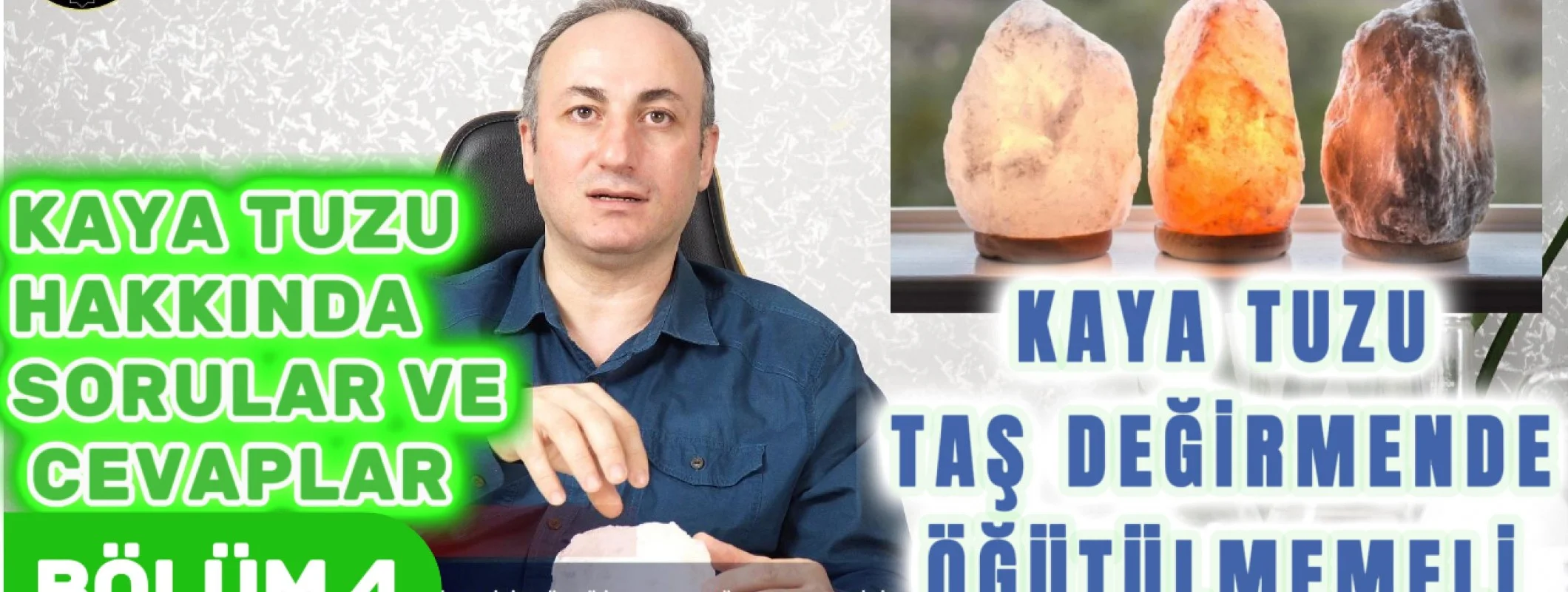
Crystalline Rock Salt Questions & Answers – Part 4. Topics discussed in the video include: Why does the Ministry of Agriculture and Forestry restrict the use of grain stone mills for grinding salt? What is the potential risk of grinding salt in a stone grain mill? Can hard rock salt abrade the millstone and introduce stone particles into the salt? Why are stainless-steel food grinders generally preferred for controlled food processing? Can microplastic contamination occur when salt is ground or stored in unsuitable plastic equipment? Why should a salt lamp not be treated as a device that must be heated to “release ions”? What part of a salt lamp’s use is decorative, and which health claims require scientific caution? How can salt interact with humidity in the surrounding air? Are radioactive substances or unusual elements present in natural rock salt, and how should laboratory results be interpreted? What are poorly soluble or insoluble mineral particles in natural salt? What may cause a mineral-like odour during grinding or dissolution? What are salt soap, bath salt, foot salt and dishwasher salt, and how are they used? What is a clay mask and how is it used? Where should crystalline rock salt be purchased, and how should consumers verify the producer, origin and traceability of a product?
For retail products, the original Turkish discussion refers to cankirituzu.com and Tuzcu Baba. Product identity and origin should always be checked from the actual package, producer information and applicable food-business registration details rather than from marketplace wording alone.
You can explore related material in the Uses of Salt section.